
Three functional groups
Which nerves can be affected?
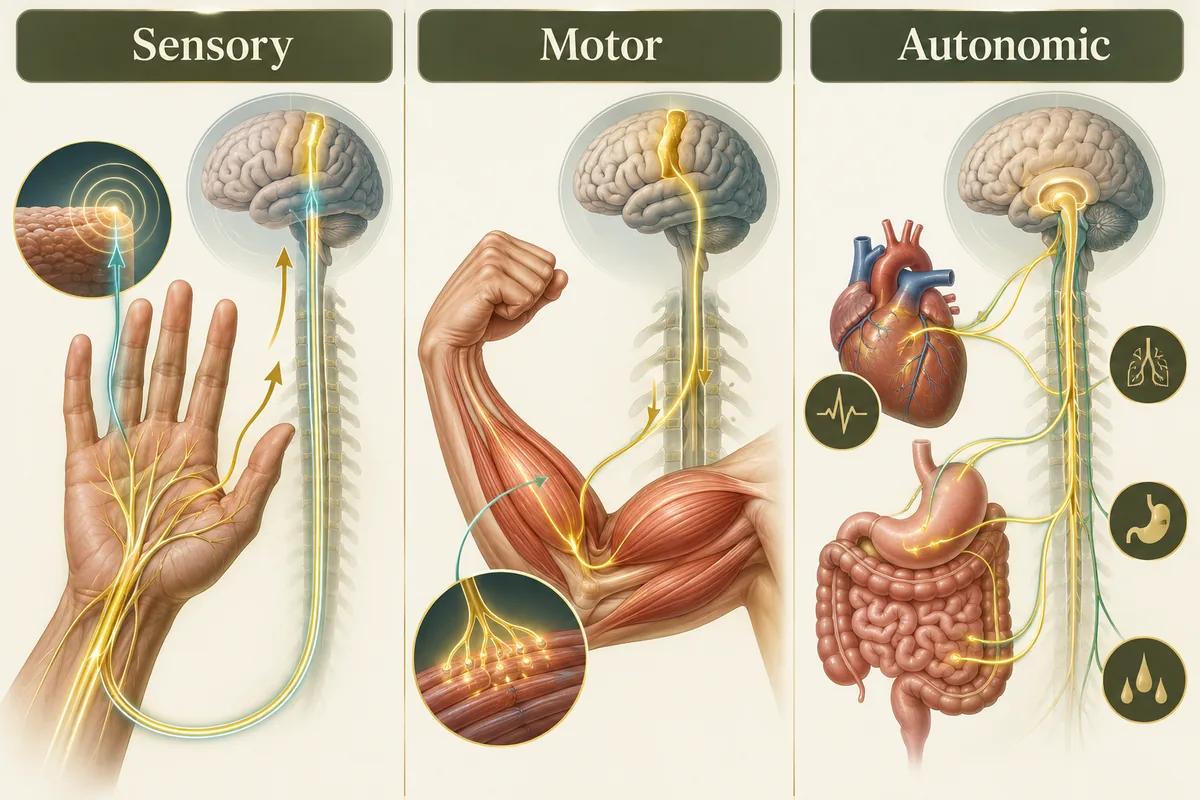
Sensory nerves
Responsible for sensations such as touch, pain, vibration, and temperature.
Motor nerves
Control voluntary muscles and movement.
Autonomic nerves
Help regulate blood pressure, sweating, digestion, bladder function, and other automatic body processes.
Possible changes
Common symptoms
Symptoms depend on which nerves are affected.
Sensory symptoms
- numbness
- tingling
- burning or shooting pain
- altered temperature sensation
- reduced ability to feel touch
- balance problems
Motor symptoms
- weakness
- muscle cramps
- muscle twitching
- loss of muscle bulk
Autonomic symptoms
Changes in sweating, blood-pressure regulation, digestion, or other involuntary body functions may occur.
Underlying conditions and exposures
Causes
There are many possible causes of peripheral neuropathy. Examples include:
- diabetes
- physical injury or nerve compression
- vascular problems
- autoimmune disease
- kidney or liver disease
- infections
- certain medications or chemotherapy
- toxins or alcohol exposure
- vitamin deficiencies or excesses
- inherited disorders
Because there are more than 100 recognized forms of peripheral neuropathy, identifying the underlying cause is an important part of medical evaluation.
Clinical assessment
How healthcare professionals evaluate neuropathy
Evaluation may involve:
- detailed medical history
- neurological examination
- sensory testing
- blood tests
- metabolic and vitamin testing
- nerve-conduction studies
- electromyography
- imaging or other specialized testing when appropriate
Individualized care
Treatment and management
Treatment depends on the underlying cause and the type of nerve damage.
Management may involve treating the underlying condition, managing blood glucose in diabetes, physical or occupational therapy, braces or supportive devices, medication for neuropathic pain, addressing vitamin deficiencies or toxic exposures, or treatment of autoimmune or inflammatory causes when appropriate.
Treatment decisions should be individualized.
Safety and support
Living with peripheral neuropathy
People with reduced sensation may need extra attention to foot care, preventing burns or cuts, fall prevention, safe footwear, and monitoring injuries that may not be easily felt.
People experiencing pain or weakness may benefit from rehabilitation and appropriate medical support.
Professional guidance
When to seek medical attention
Seek medical evaluation for new or progressive numbness, burning, tingling, weakness, unexplained balance problems, or loss of sensation.
Rapidly progressing weakness, breathing difficulty, major autonomic symptoms, or other sudden neurological changes may require urgent care.
References