Neurological Conditions
Stroke: Recognizing a Neurological Emergency
A stroke occurs when blood flow to part of the brain is interrupted or when bleeding occurs in or around the brain. Without adequate blood and oxygen, brain cells can become damaged or die. Stroke is a medical emergency, and rapid treatment can reduce brain damage and improve outcomes.
Different emergencies
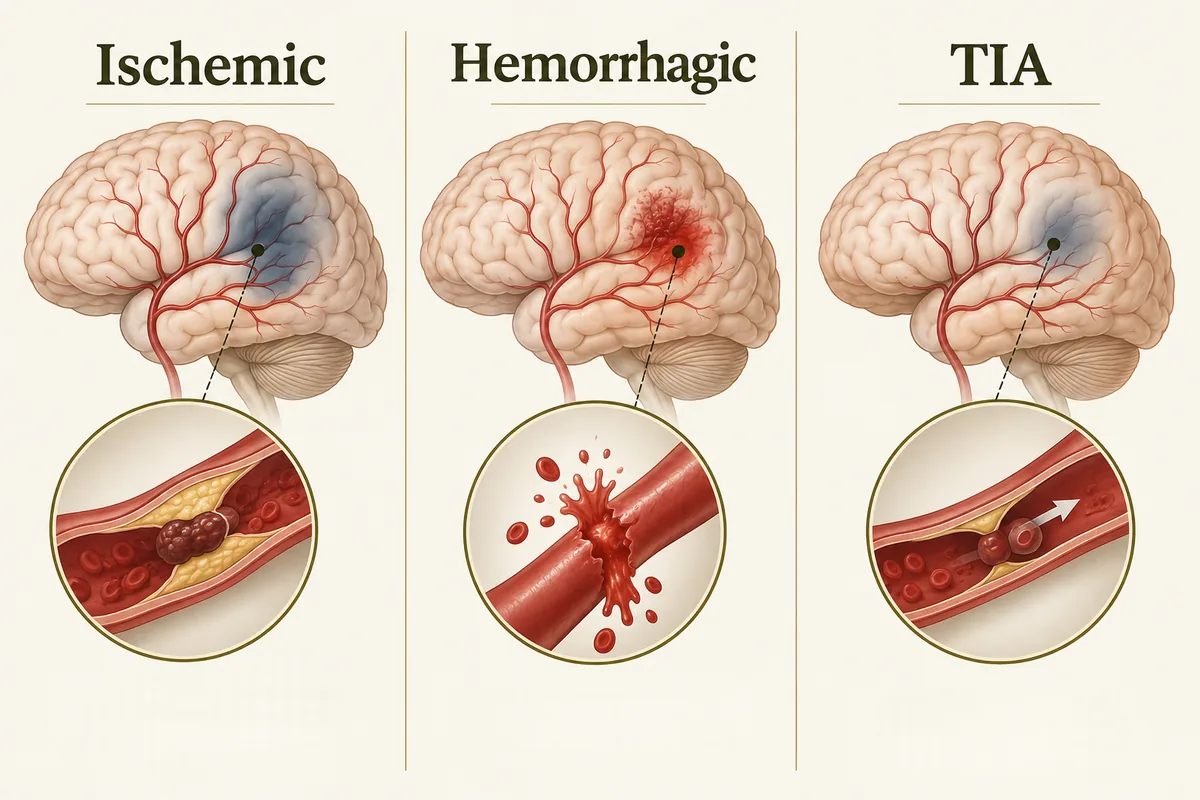
Main types of stroke
Ischemic stroke
Occurs when a blood vessel supplying the brain becomes blocked.
Hemorrhagic stroke
Occurs when a blood vessel ruptures and causes bleeding.
Transient ischemic attack — TIA
Sometimes called a “mini-stroke,” a TIA causes temporary stroke-like symptoms. Even if symptoms resolve, a TIA requires urgent medical assessment because it can signal serious stroke risk.
Act immediately
Warning signs
Stroke symptoms usually appear suddenly. Important warning signs include:
- sudden numbness or weakness of the face, arm, or leg, especially on one side
- sudden confusion
- difficulty speaking or understanding speech
- sudden trouble seeing
- sudden trouble walking
- dizziness
- loss of balance or coordination
- sudden severe headache without a known cause
Emergency recognition
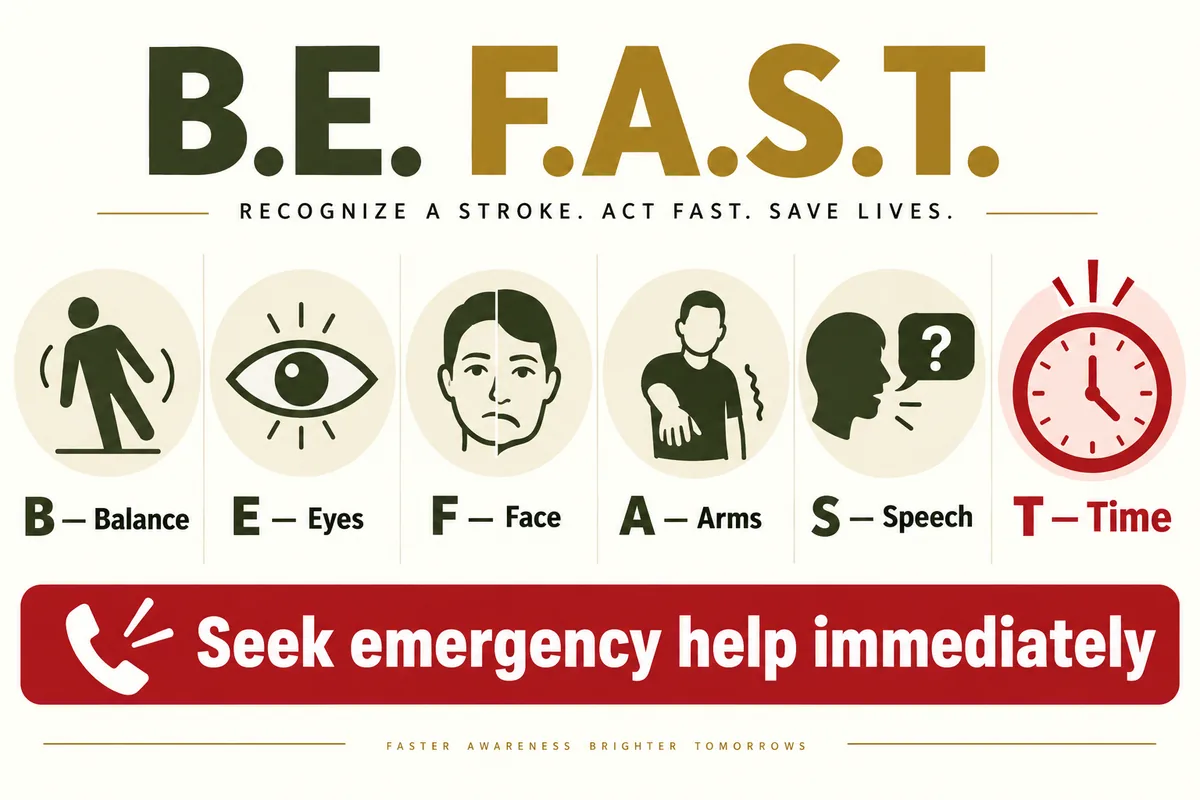
B.E. F.A.S.T.
- B — Balance: sudden balance problems or dizziness
- E — Eyes: sudden vision changes
- F — Face: one side of the face droops
- A — Arms: one arm becomes weak or drifts downward
- S — Speech: speech becomes slurred, strange, or difficult
- T — Time: seek emergency medical help immediately
Do not wait to see if symptoms improve.
Health context
Risk factors
Stroke risk is influenced by factors including:
- high blood pressure
- high cholesterol
- diabetes
- heart disease
- atrial fibrillation
- smoking
- physical inactivity
- obesity
- excessive alcohol consumption
- previous stroke or TIA
- age and family history
Many risk factors can be managed with appropriate healthcare and lifestyle changes.
Emergency assessment
How stroke is evaluated
Emergency evaluation may involve neurological assessment, brain imaging, blood tests, evaluation of blood vessels, heart testing, and determining when symptoms began.
The type of stroke must be identified because treatments for blocked blood vessels differ from treatments for bleeding.
Time-sensitive care
Treatment and recovery
Treatment depends on the type of stroke and how quickly medical care begins.
Some ischemic strokes may be treated with medicines or procedures designed to restore blood flow when a person meets appropriate clinical criteria. Hemorrhagic stroke requires different management.
After the emergency phase, rehabilitation may involve physical therapy, occupational therapy, speech and language therapy, cognitive rehabilitation, swallowing support, and psychological and social support.