Sensory nerves
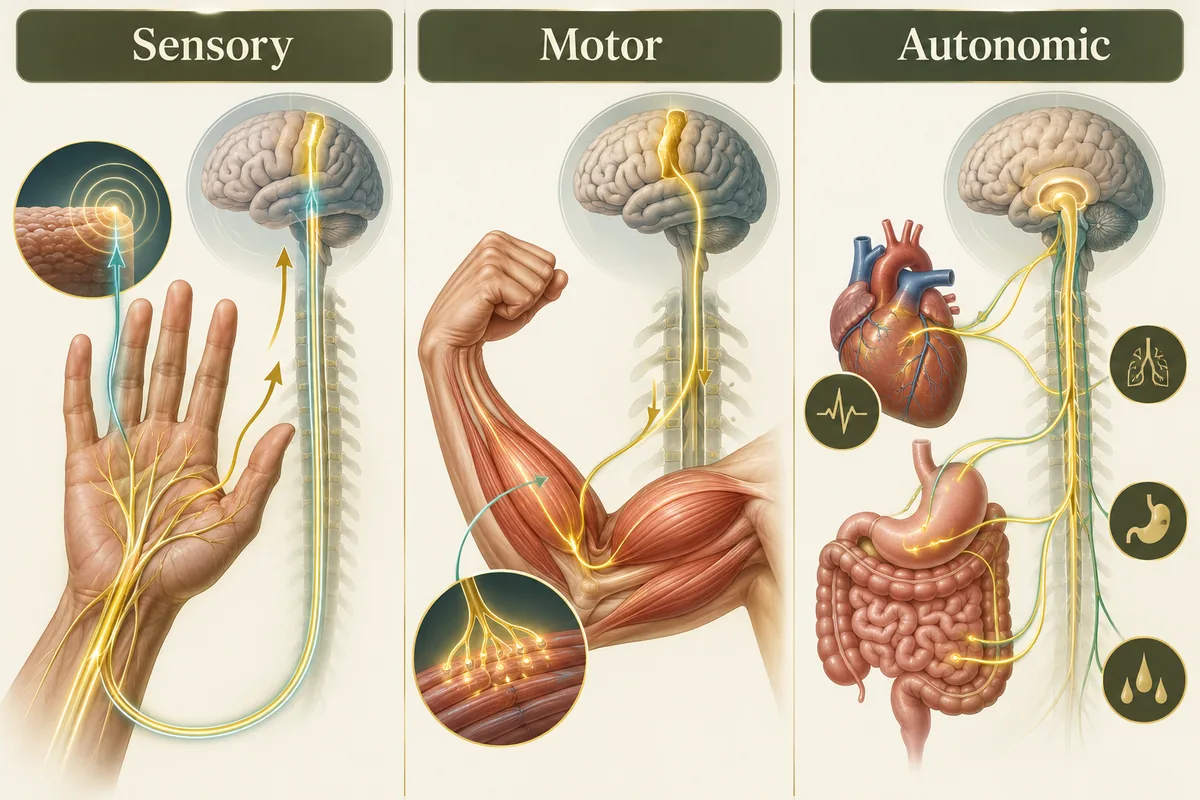
Responsible for sensations such as touch, pain, vibration, and temperature.

Neurological Conditions
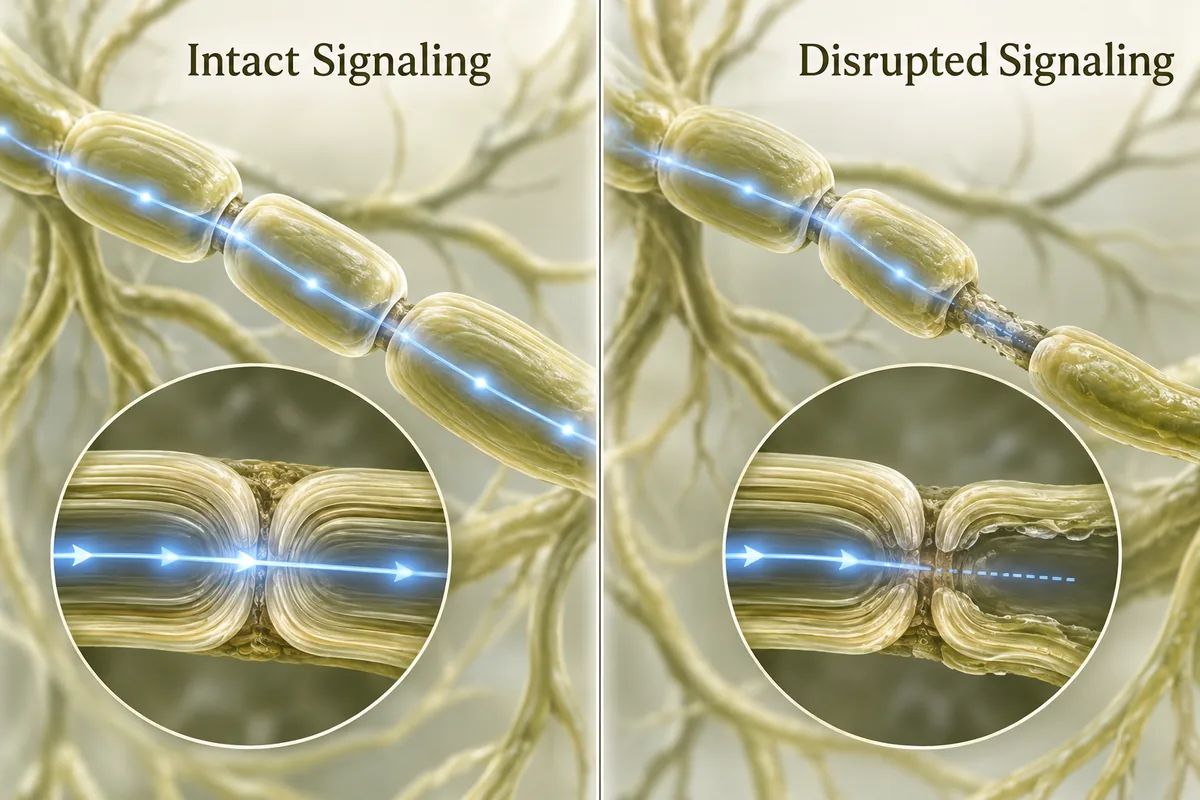
Peripheral neuropathy refers to a large group of conditions involving damage to the peripheral nervous system. The peripheral nervous system carries information between the brain and spinal cord and the rest of the body. When peripheral nerves are damaged, the signals they send and receive can become interrupted, distorted, or generated when they should not be.

Three functional groups
Responsible for sensations such as touch, pain, vibration, and temperature.
Control voluntary muscles and movement.
Help regulate blood pressure, sweating, digestion, bladder function, and other automatic body processes.
Possible changes
Symptoms depend on which nerves are affected.
Changes in sweating, blood-pressure regulation, digestion, or other involuntary body functions may occur.
Underlying conditions and exposures
There are many possible causes of peripheral neuropathy. Examples include:
Because there are more than 100 recognized forms of peripheral neuropathy, identifying the underlying cause is an important part of medical evaluation.
Clinical assessment
Evaluation may involve:
Individualized care
Treatment depends on the underlying cause and the type of nerve damage.
Management may involve treating the underlying condition, managing blood glucose in diabetes, physical or occupational therapy, braces or supportive devices, medication for neuropathic pain, addressing vitamin deficiencies or toxic exposures, or treatment of autoimmune or inflammatory causes when appropriate.
Treatment decisions should be individualized.
Safety and support
People with reduced sensation may need extra attention to foot care, preventing burns or cuts, fall prevention, safe footwear, and monitoring injuries that may not be easily felt.
People experiencing pain or weakness may benefit from rehabilitation and appropriate medical support.
Professional guidance
Seek medical evaluation for new or progressive numbness, burning, tingling, weakness, unexplained balance problems, or loss of sensation.
Rapidly progressing weakness, breathing difficulty, major autonomic symptoms, or other sudden neurological changes may require urgent care.
References