
Neurological Conditions
Multiple Sclerosis: Understanding a Disease of the Central Nervous System
Multiple sclerosis, or MS, is a disease of the central nervous system involving the brain and spinal cord. In MS, immune activity damages myelin—the protective material surrounding many nerve fibers. Damage to myelin can slow or block communication between the brain, spinal cord, and the rest of the body.
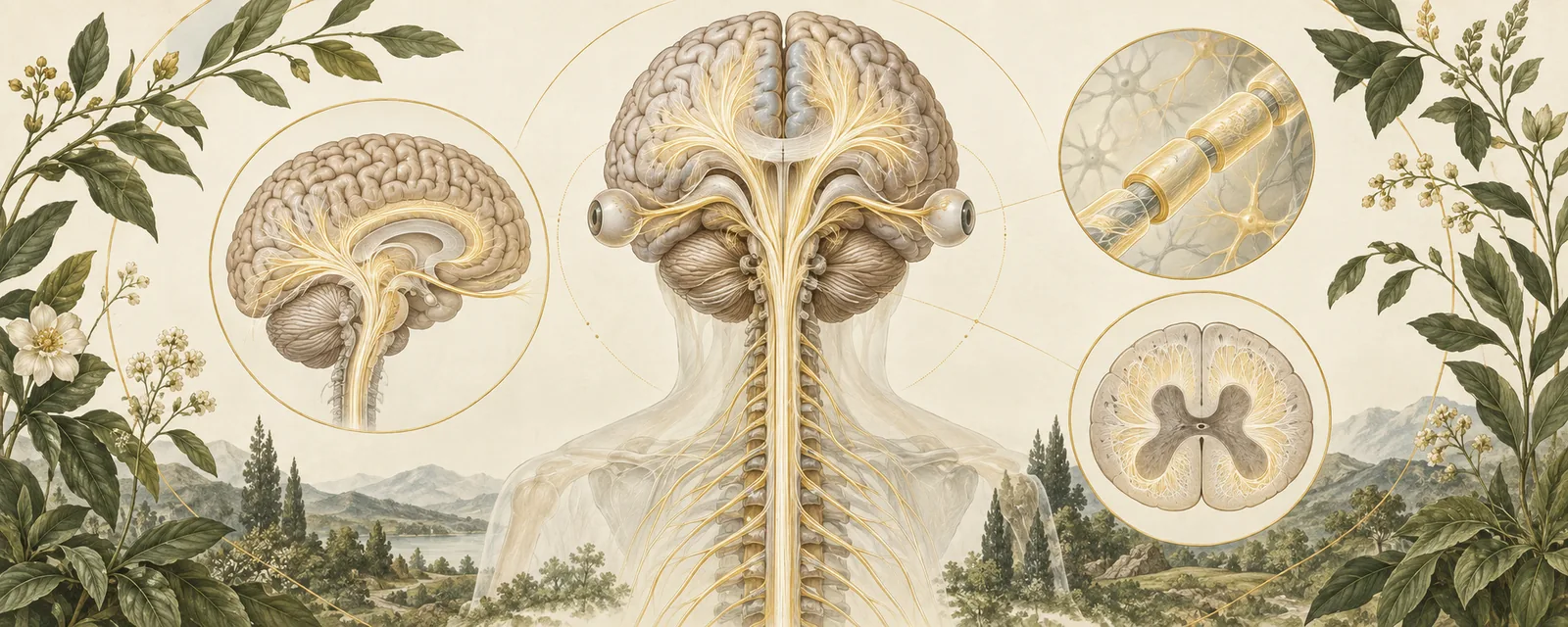
Myelin and communication
What happens to nerve signals in MS?
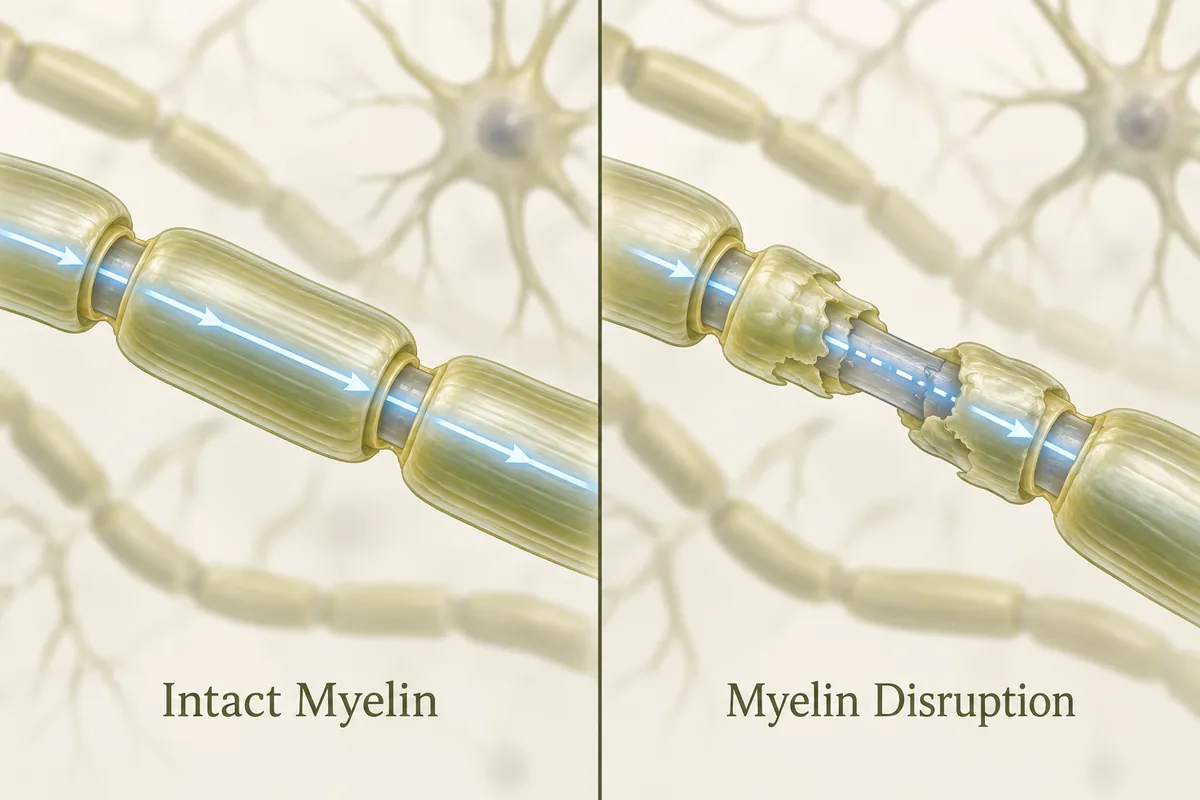
Myelin helps nerve signals travel efficiently.
When myelin becomes inflamed or damaged:
- electrical signaling can become slower
- messages may be disrupted
- different neurological functions may be affected depending on where damage occurs
The brain, spinal cord, and optic nerves can all be involved.
Possible changes
Common signs and symptoms
Symptoms vary greatly between people and may change over time. Possible symptoms include:
- visual disturbances
- muscle weakness
- numbness or tingling
- problems with coordination
- balance difficulties
- difficulty walking
- tremor
- fatigue
- bladder or bowel symptoms
- changes in concentration or memory
Because many other conditions can cause similar symptoms, these signs do not by themselves confirm MS.
Current understanding
Causes and risk factors
The exact cause of MS is not fully understood.
MS is considered an immune-mediated disease in which the immune system mistakenly attacks tissues within the central nervous system.
Research suggests that genetic, environmental, and lifestyle factors may contribute to susceptibility.
Clinical assessment
How healthcare professionals evaluate MS
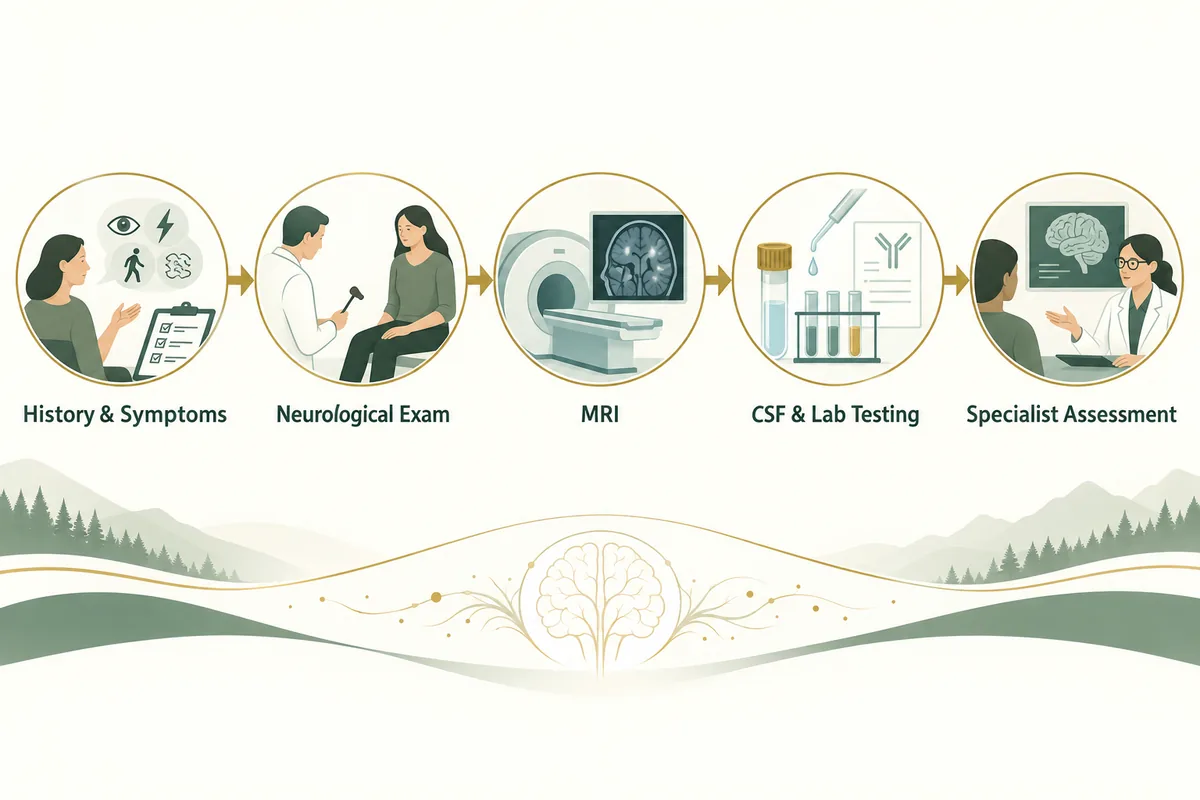
There is no single test that diagnoses every case of MS. Evaluation can involve:
- medical and neurological history
- neurological examination
- MRI of the brain and/or spinal cord
- blood tests to rule out other causes
- cerebrospinal fluid testing
- selected evoked-potential tests
MRI can help clinicians identify changes in the brain and spinal cord and monitor the condition.
Individualized care
Treatment and management
There is currently no cure for MS, but treatment can help manage the disease and its symptoms.
Care may involve:
- disease-modifying therapies
- treatment of relapses
- symptom management
- physical therapy
- occupational therapy
- rehabilitation
- support for mobility, fatigue, mood, and other concerns
Treatment is individualized according to disease type, symptoms, health status, and other factors.
Ongoing support
Living with MS
The course of MS varies significantly.
Some people experience periods of symptoms followed by partial or complete recovery, while others experience more gradual progression.
Ongoing care may include neurological follow-up, exercise and rehabilitation appropriate to ability, fatigue management, mobility support, mental health support, and management of bladder, bowel, pain, or cognitive symptoms when present.
Professional guidance
When to seek medical attention
New or worsening vision loss, weakness, numbness, balance changes, or difficulty walking should be discussed with a healthcare professional.
Sudden neurological symptoms should not automatically be assumed to be MS and may require urgent assessment for other causes such as stroke.
References