Neurological Conditions
Cerebral Palsy
Cerebral palsy is a group of disorders affecting movement, balance, and posture because of abnormal development of or damage to the developing brain. The condition is lifelong, but each person’s abilities and support needs are different.

Core features
Movement and posture
Cerebral palsy affects muscle control and coordination. It is not progressive brain damage, although movement, pain, fatigue, joints, mobility, and support needs can change across life.
- spastic patterns with increased muscle tone
- dyskinetic patterns with involuntary movement or changing tone
- ataxic patterns affecting balance and coordination
- mixed patterns involving more than one classification
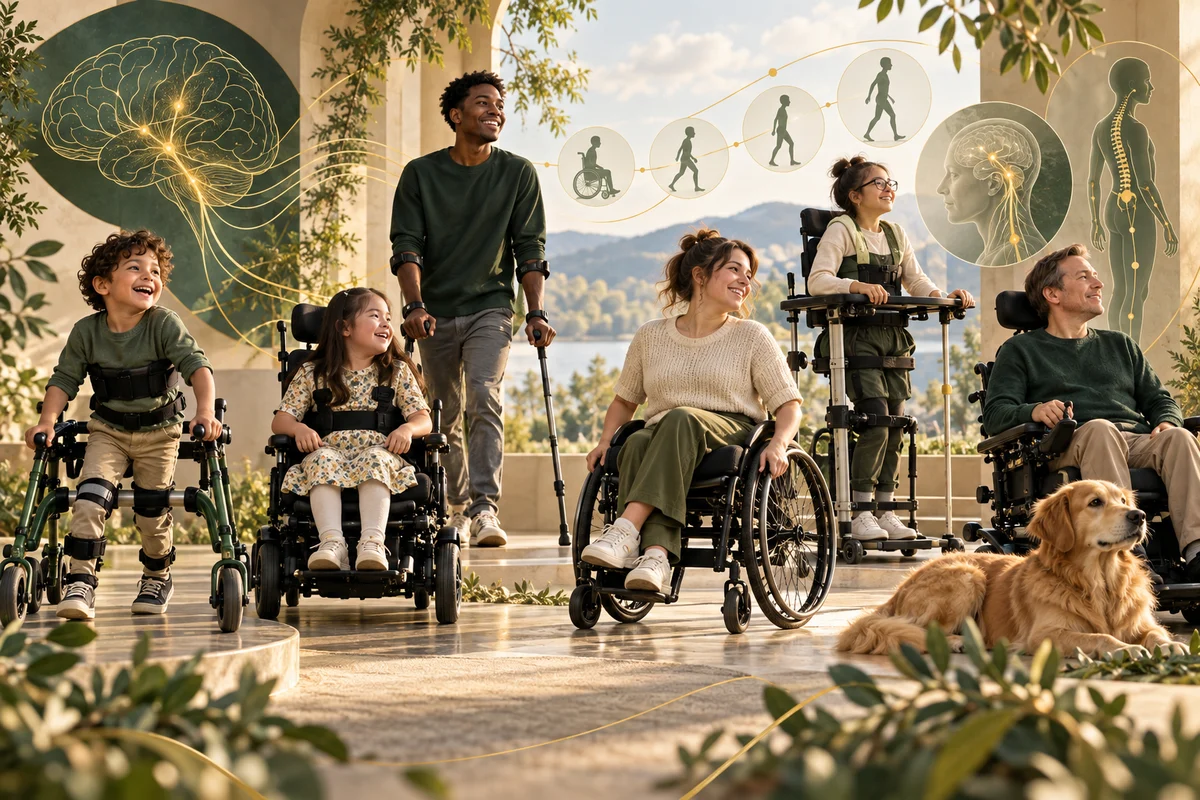
Whole-person assessment
Associated features and diagnosis
Some people also have epilepsy, vision or hearing differences, speech or swallowing difficulty, learning disability, pain, spinal or joint changes, or other health needs. Diagnosis may involve developmental monitoring, physical and neurological examination, and tests selected to clarify cause or associated conditions.
Participation and independence
Therapy, technology, and lifelong support
Care may include physical, occupational, and speech-language therapy; medicines; orthopedic or other surgery; braces; seating and mobility equipment; communication technology; pain management; and educational or vocational support.
The goal is person-centered participation, comfort, health, communication, mobility, and independence—not forcing every body to move in the same way.
Developmental concerns
When assessment may be appropriate
Concerns about delayed movement milestones, unusual stiffness or floppiness, persistent asymmetry, loss of skills, feeding difficulty, or seizures should be discussed with a healthcare professional. Early evaluation can connect families with appropriate services.
Professional & institutional sales
Order enquiries
Neuroleva is available exclusively to eligible government institutions, specialized healthcare centers, and duly licensed centers.