
Nervous System Health
Nutrition & the Nervous System: The Role of Everyday Nourishment
The brain, nerves, and the rest of the body depend on a steady supply of energy and nutrients. Nutrition is one part of the broader health environment that supports normal nervous-system function. Healthy eating patterns are associated with benefits for overall health, including cardiovascular and metabolic health, both of which are relevant to maintaining brain health over time.

Whole-body context
Nutrition and the nervous system
The nervous system depends on many nutrients and normal metabolic processes to function properly.
A balanced dietary pattern typically includes:
- vegetables and fruits
- whole grains
- appropriate protein sources
- healthy sources of dietary fat
- sufficient fluids
Good nutrition also supports the broader cardiovascular and metabolic systems that supply the brain and nerves with oxygen and nutrients.
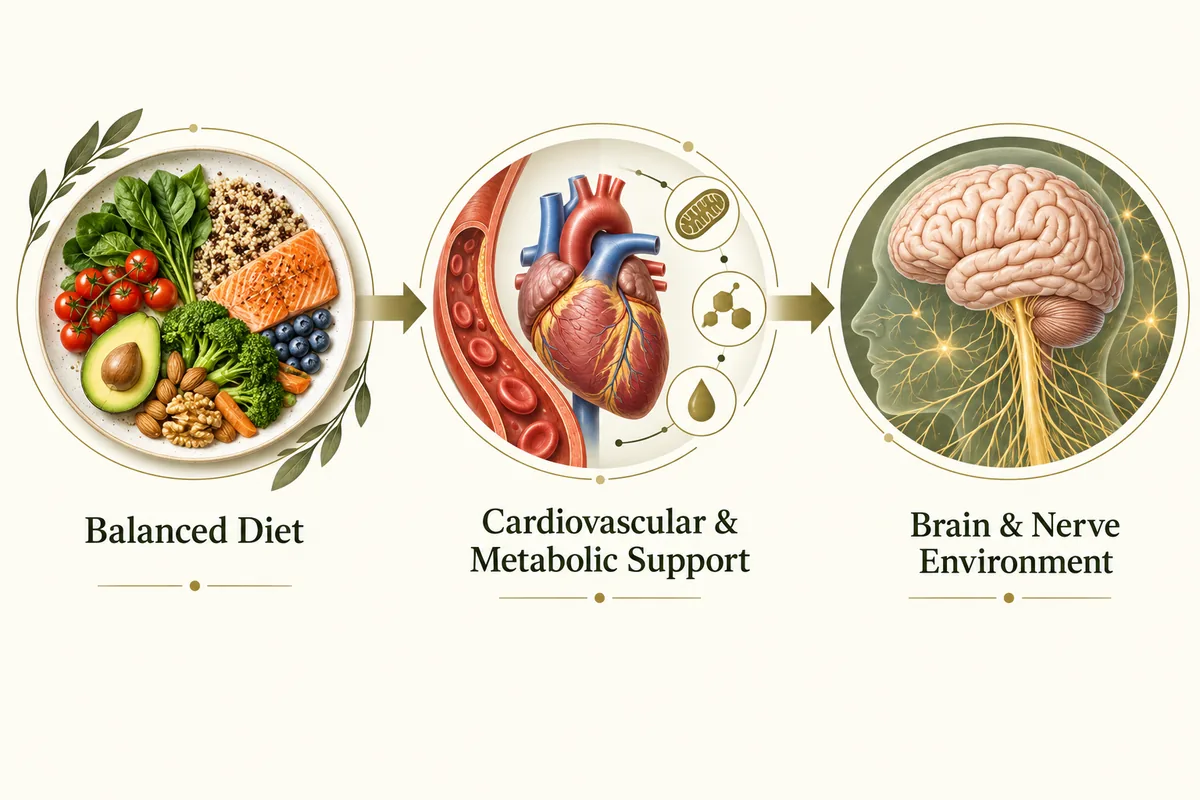
Balanced patterns
Dietary fats and nervous-system wellness
Dietary fats serve many biological roles in the body.
Unsaturated fats, including those found in foods such as olive oil, nuts, seeds, and fish, are commonly included in dietary patterns associated with cardiovascular health.
Mediterranean-style eating patterns emphasize foods such as vegetables, fruits, whole grains, legumes, nuts, fish, and unsaturated fats such as olive oil. Research continues to investigate how these eating patterns relate to long-term cognitive health.
Current evidence
What research says about diet and brain health
Some observational studies have associated Mediterranean and MIND-style dietary patterns with better cognitive outcomes.
However, research findings are not conclusive enough to say that a particular diet prevents Alzheimer’s disease or other forms of cognitive decline.
Nutrition should therefore be considered as part of an overall health pattern rather than a guaranteed method of preventing neurological disease.
Use thoughtfully
Vitamins, supplements, and nerve health
Certain nutrient deficiencies can affect nerve function.
For example, vitamin B12 deficiency can contribute to neurological problems, while excessive vitamin B6 intake can also damage peripheral nerves. This is an important reminder that “more” is not always better.
Dietary supplements should be used thoughtfully, especially by people with chronic health conditions, medication use, pregnancy, known nutritional deficiencies, or neurological symptoms.
A healthcare professional can advise whether testing or supplementation is appropriate.
Everyday principles
Building a balanced nutritional routine
General principles may include:
- eating a varied diet
- choosing fruits and vegetables regularly
- including whole grains and appropriate proteins
- choosing mostly unsaturated fats
- staying adequately hydrated
- limiting excessive salt, added sugars, and heavily processed foods
- discussing specific dietary needs with a qualified healthcare professional
Nutrition works alongside sleep, movement, stress management, medical care, and other aspects of everyday health.

Individual guidance
When to seek professional advice
Speak with a healthcare professional or registered dietitian if you:
- have persistent neurological symptoms
- have a known nutrient deficiency
- are considering high-dose supplementation
- have significant dietary restrictions
- take medicines that may interact with supplements
- need nutrition guidance for a medical condition