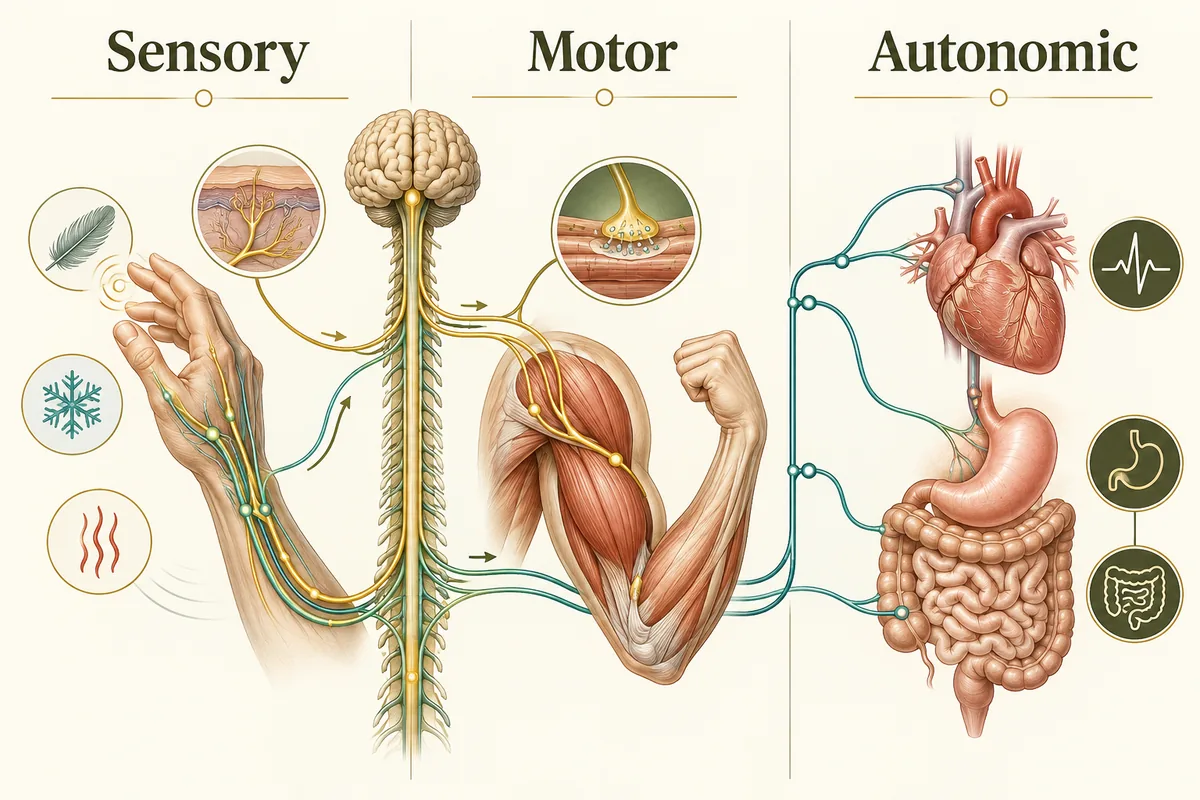
Sensory nerves
Carry information about touch, pressure, temperature, pain, and body position.

Nervous System Health
Your peripheral nerves form an extensive communication network between the brain and spinal cord and the rest of the body. They carry sensory information toward the central nervous system and transmit instructions outward to muscles, organs, blood vessels, glands, and other tissues. Healthy nerve function is important for movement, sensation, coordination, and many automatic body processes.

Communication pathways
The nervous system can be broadly divided into:
Peripheral nerves work much like communication pathways, continuously carrying signals between the central nervous system and the body. Different nerves perform different jobs.
Carry information about touch, pressure, temperature, pain, and body position.
Carry signals that help muscles contract, move, maintain posture, and perform coordinated actions.
Help regulate heart and blood-vessel function, digestion, sweating, urination, and other organ functions.
Brain-body communication
Peripheral nerves allow the brain and body to communicate efficiently.
When nerve signaling is disrupted, a person may experience changes in sensation, strength, balance, coordination, movement, or automatic body functions.
Because nerves reach nearly every part of the body, nerve problems can appear in many different ways.
General health context
General health also matters for nerve health. Factors that can affect peripheral nerves include:
Vitamin B12 deficiency and excessive vitamin B6 intake are among recognized nutrition-related causes of nerve injury, which is one reason supplements should not be taken in excessive amounts without appropriate guidance.
Everyday habits
Everyday habits that support general health may also contribute to a healthier environment for peripheral nerves. These can include:
These measures are not treatments for nerve disorders but form part of general health maintenance.

Professional guidance
Persistent or unexplained numbness, tingling, burning sensations, weakness, loss of sensation, difficulty with balance, or unexplained changes in sweating or blood-pressure regulation should be discussed with a qualified healthcare professional.
Sudden weakness, loss of sensation, difficulty speaking, facial drooping, or other abrupt neurological changes require urgent assessment.
References